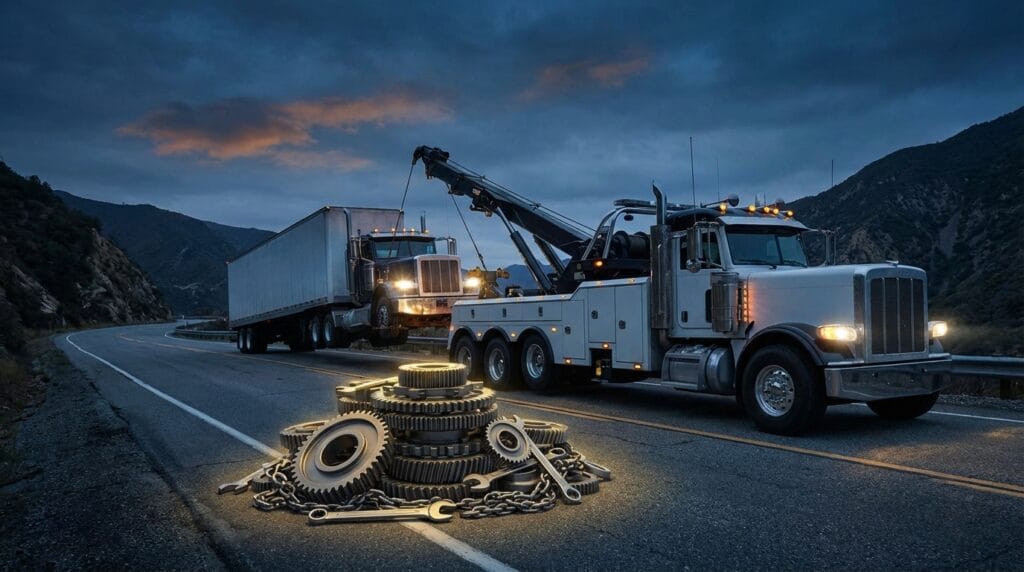
When a heavy-duty rig breaks down in the middle of a critical delivery, the sticker shock often follows the realization that you need professional assistance to get moving again. Understanding why tow trucks for semis carry a significantly higher price tag than standard vehicle towing requires looking at the specialized machinery, technical expertise, and immense risks involved in heavy recovery.
Table of Contents
The Cost of Heavy-Duty Machinery
The most obvious reason for the price difference lies in the hardware itself. You cannot tow an 80,000-pound tractor-trailer with a standard flatbed or wheel-lift truck. It requires a heavy-duty wrecker or a rotator, which are engineering marvels in their own right.
While a standard light-duty tow truck might cost a company between $80,000 and $120,000, the entry price for a reliable heavy-duty wrecker often starts at $450,000 and can easily exceed $850,000 for a fully equipped rotator. These tow trucks for semis are massive investments. To remain operational, Tow Mesa must amortize the cost of this equipment over its service life, which naturally factors into the hourly rates and hook-up fees charged to the customer.
Maintenance and Fuel Consumption
Beyond the initial purchase price, the operating costs for heavy-duty wreckers are astronomical compared to standard vehicles:
- Fuel Economy: Heavy wreckers are heavy themselves. When towing a loaded semi, fuel efficiency drops into the single digits, sometimes as low as 3 to 4 miles per gallon.
- Tires and Hydraulics: The wear and tear on tires, hydraulic pumps, and winches is severe. Replacing a single tire on a heavy wrecker is a significant expense, and these trucks have many more tires than a standard vehicle.
- Specialized Tools: These trucks must be stocked with heavy-duty chains, straps, snatch blocks, and cribbing, all of which must be rated for immense weight loads and inspected regularly for safety.
Technical Complexity and Time
Towing a passenger car is often a “hook and go” scenario. The operator puts the car in neutral, hooks it up, and drives away. However, tow trucks for semis require a much more intricate process that takes time and precision.
When a semi-truck breaks down, the towing operator cannot simply lift the front end and drive off. They must manually disconnect the driveshaft to prevent destroying the truck’s transmission. Additionally, they must plumb into the truck’s air brake system to release the brakes and ensure the towed vehicle has braking capability. If the truck has aerodynamic skirting or low bumpers, these must be carefully managed or removed to prevent damage.
This preparation can take anywhere from 30 minutes to over an hour before the tow even begins. In the towing industry, time is money, and the labor required to prepare a semi for transport is a major cost driver.
Risk, Liability, and Insurance Trends in 2025
As we close out 2025, the insurance landscape for the towing and logistics industry has shifted dramatically. Insurance premiums for heavy-duty towing operations have skyrocketed due to the sheer liability involved. When an operator is towing a loaded semi, they are responsible for the wrecker, the customer’s rig, and the cargo inside.
If a passenger car slips off a hook, it is a bad day. If a semi-truck carrying hazardous materials or expensive electronics is involved in a secondary accident during a tow, it is a catastrophic event. To protect our clients and our business, Tow Mesa maintains comprehensive insurance policies that reflect these high-stakes risks.
Comparing Light-Duty vs. Heavy-Duty Towing
To visualize the difference in scale and cost, consider the following comparison:
| Factor | Light-Duty Towing | Heavy-Duty Towing |
|---|---|---|
| Equipment Cost | $80k – $120k | $450k – $1M+ |
| Setup Time | 5 – 15 Minutes | 45 Minutes – 2 Hours |
| Operator Training | Standard Certification | Advanced Specialized Certifications |
| Liability Risk | Low to Moderate | Extremely High |
The Human Element: Specialized Expertise
Operating tow trucks for semis is not a job for a novice. It requires years of experience and specialized certification. A heavy-duty operator must understand physics, weight distribution, and rigging techniques.
In December 2025, the labor market for skilled trades remains tight. Finding and retaining operators who can safely manage a heavy recovery in the middle of the night, perhaps during a rare Arizona rainstorm or amidst the chaotic holiday traffic on the US 60, requires paying competitive wages. You aren’t just paying for the truck; you are paying for the expert who knows how to recover your asset without causing further damage.
Seasonal Factors: The December 2025 Rush
Currently, the logistics industry is in the final stretch of the holiday shipping rush. Warehouses in the East Valley are operating at maximum capacity, and trucks are pushing hard to meet deadlines. This increased demand puts a strain on towing availability.
When demand for tow trucks for semis peaks—as it often does in December due to higher fleet mileage and end-of-year logistics pushes—pricing reflects the scarcity of available heavy-duty wreckers. At Tow Mesa, we strive to keep our rates competitive and transparent, even during peak operational times, ensuring that local fleets and long-haul truckers have a partner they can rely on.
Conclusion
While the cost of heavy towing is high, it reflects the immense investment in equipment, insurance, and skilled labor required to get your rig back on the road safely. If you find yourself in need of professional assistance in the East Valley, call our dispatch team immediately at 480-725-5862 for rapid response. You can also visit our website to request heavy-duty recovery services and get your fleet moving again.