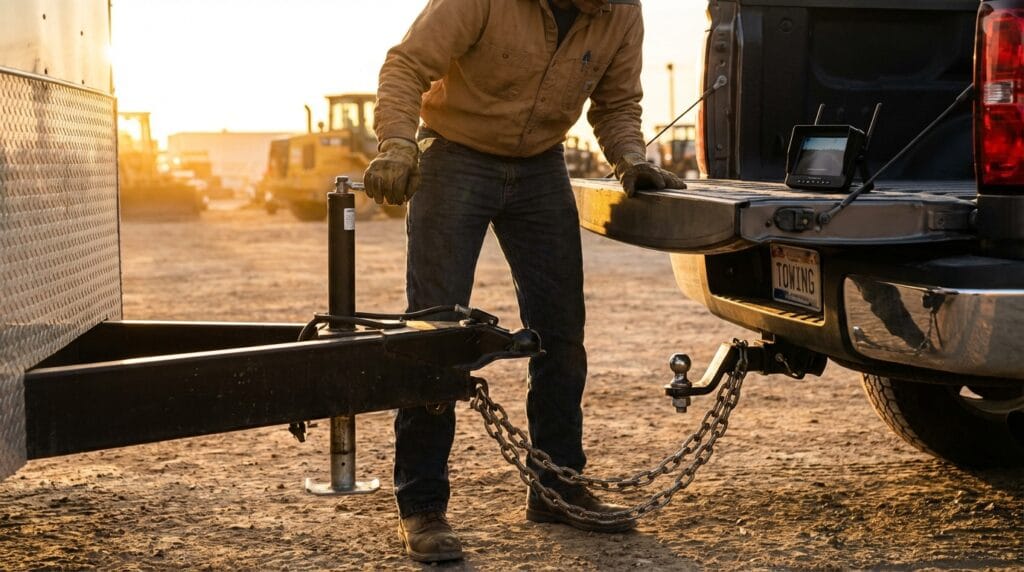
Mastering the art of solo towing requires patience, the right technique, and a focus on safety, especially when you don’t have a spotter to guide you to the coupler. Whether you are hauling equipment for a Mesa job site or preparing a trailer for a weekend trip, learning to hitch up alone is an invaluable skill that saves time and frustration.
Table of Contents
The Evolution of Solo Hitching in 2025
Gone are the days when hitching a trailer by yourself meant getting in and out of your truck twenty times to check your alignment. As we move through January 2025, modern technology has made the process significantly smoother. Most newer trucks are now equipped with high-definition backup cameras, and some even feature “hitch assist” technology that automatically steers the vehicle to the coupler.
However, technology isn’t foolproof. Sensors can get covered in winter road grime, and batteries in wireless cameras can die in the cold. Therefore, knowing the fundamental manual techniques of towing remains essential for any driver. Below, we break down the most efficient methods to get you hitched up and on the road quickly.
Step-by-Step: The Solo Alignment Process
If you are relying on skill rather than sensors, the “alignment” phase is usually the most time-consuming part of the process. Follow these steps to minimize corrections:
- Prepare the Trailer: Ensure the trailer wheels are chocked securely so it doesn’t roll when bumped. Raise the trailer tongue coupler so it sits about two to three inches higher than the ball on your hitch.
- Center Your Approach: Start with your vehicle completely straight in line with the trailer. It is much harder to judge angles in side mirrors than it is to judge a straight line.
- Use a Visual Marker: If you don’t have a backup camera, place a piece of tape or a magnetic marker on the center of your rear window and align it with the trailer jack in your rearview mirror.
- The “Tennis Ball” Trick: A classic but effective method involves magnetic telescoping rods (often tipped with tennis balls). Place one on the hitch ball and one on the trailer coupler. When the two balls touch or align in your mirror, you are right on target.
Securing the Connection
Once you have successfully backed the vehicle so the ball is directly under the coupler, put the vehicle in park and engage the emergency brake. This prevents the truck from rolling a few inches after you take your foot off the brake, which can misalign your hitch setup.
Lower the trailer tongue onto the ball. You should feel the weight of the trailer transfer to the vehicle’s suspension. Close the latch on the coupler and insert the safety pin. Never skip the safety pin; road vibrations can cause an unpinned latch to pop open.
Safety Chains and Electrical: The Non-Negotiables
Connecting the trailer to the ball is only half the battle. Professional towing standards dictate strict safety protocols for chains and wiring.
- Cross the Chains: Always cross your safety chains under the coupler (left chain to right loop, right chain to left loop). This creates a “cradle” that will catch the trailer tongue if it disconnects from the ball, preventing it from digging into the pavement.
- Check the Breakaway Cable: This cable pulls a pin to engage the trailer’s emergency brakes if it separates from the vehicle. Ensure it is attached to a permanent part of the hitch receiver, not the chains.
- Inspect the 7-Way Plug: In January, moisture and road salts can corrode electrical connections. Apply a small amount of dielectric grease to the plug to ensure your brake lights and turn signals function correctly.
Comparison: Hitching Aids vs. Manual Methods
To help you decide which tools might speed up your solo routine, we’ve compared the most common methods used by drivers in Mesa.
| Method | Pros | Cons | Cost |
|---|---|---|---|
| Backup Camera | Precise alignment; no need to exit vehicle. | Lens can get dirty/wet; depth perception issues. | Free (if equipped) |
| Magnetic Alignment Rods | Visual confirmation without electronics; very cheap. | Requires setup time; rods can fall off in wind. | $20 – $40 |
| The “Get Out and Look” | 100% reliable; allows you to inspect ground conditions. | Slow; frustrating; physically repetitive. | Free |
Winter Towing Considerations
Since we are in the midst of winter, it is vital to check your tire pressure before hitching up. Cold air compresses, meaning your trailer tires might be under-inflated even if they looked fine a few months ago. Towing a heavy load on under-inflated tires is a recipe for a blowout.
Additionally, check your vehicle’s suspension. If your truck sags significantly when the trailer weight is applied, you may need a weight-distribution hitch. This helps keep your steering geometry correct and your headlights aimed at the road rather than the sky, which is crucial for those early sunset winter drives.
When Things Don’t Go to Plan
Even with the best preparation, equipment failure can happen. You might find that the trailer jack is seized, the ball mount is rusted into the receiver, or the trailer lights simply refuse to turn on. In these instances, forcing the equipment can lead to injury or damage to your vehicle.
If you encounter mechanical issues with your vehicle while trying to haul a load, or if you find yourself stuck on the side of the road with a trailer that has blown a tire, professional towing assistance is the safest option. Trying to change a trailer tire on a busy Mesa highway without the proper heavy-duty jacks and safety lighting is extremely dangerous.
Being able to hitch up solo is a point of pride for many drivers, but recognizing when you need help is a sign of experience. Whether it is a flatbed requirement for a broken-down truck or assistance moving a trailer that isn’t road-ready, Tow Mesa is equipped to handle the heavy lifting.
Conclusion
Mastering the solo hitch-up takes practice, but following these steps will ensure you get on the road safely and efficiently. If you find yourself in a bind with equipment failure or need professional assistance moving a vehicle, don’t hesitate to reach out to our team. You can call us immediately at 480-725-5862 or request a fast towing quote online to get the help you need.