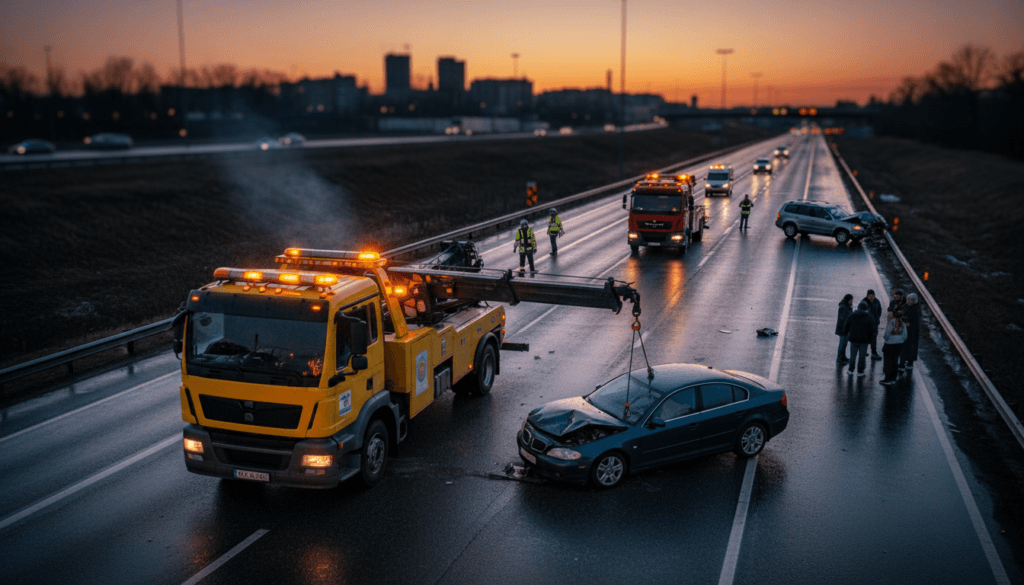
Being involved in a car crash can be one of the most stressful experiences a driver ever faces, leaving you shaken and unsure of what to do next. Knowing the correct steps to take in the immediate aftermath is crucial for your safety, your legal rights, and your financial protection.
This guide provides a clear, step-by-step roadmap to navigate the moments, hours, and days following an accident.
Key Takeaways
- Prioritize Safety Above All Else: Your first action after a crash should always be to check for injuries and move yourself and your vehicle to a safe location away from traffic, if possible.
- Thorough Documentation is Non-Negotiable: The information and photos you collect at the scene are the most critical evidence you will have for police reports and insurance claims.
- Always Report the Accident: Filing a police report creates an official, unbiased record of the incident, which is invaluable for insurance purposes, especially if disputes arise later.
- Choose a Professional Towing Service: Using a trusted local company like Tow Mesa ensures your vehicle is handled safely and transported to a secure location, preventing further complications.
Table of Contents
What is the Immediate Priority After a Car Crash?
The immediate priority after a car crash is ensuring the safety of everyone involved. Before you even think about insurance or vehicle damage, you must assess the physical well-being of yourself, your passengers, and the occupants of any other vehicles. Everything else can wait.
Step 1: Assess for Injuries
Your health is the most important thing. Before exiting your vehicle, take a moment to check yourself for any pain or visible injuries. Then, if you are able, check on your passengers and the occupants of the other vehicle(s). If anyone is injured, call 911 immediately and do not attempt to move them unless their current location puts them in imminent danger, such as in a fire.
Step 2: Move to a Safe Location
If the accident is minor and the vehicles are still drivable, the next step is to move them out of the flow of traffic. Pull over to the shoulder of the road or into a nearby parking lot. This prevents a secondary accident and keeps you safe from other drivers who may not see the obstruction in the road. If your vehicle cannot be moved, you need to take precautions to make it as visible as possible.
Step 3: Turn on Hazard Lights and Use Flares
Activating your vehicle’s hazard lights is a universal signal for caution. This is the first thing you should do after stopping to alert other drivers to the situation. If you have them, and it is safe to do so, placing emergency flares or reflective triangles behind your vehicle provides an additional layer of warning, especially at night or in poor weather conditions. This simple action can save lives.
How Do I Document the Scene of an Accident?
You document the scene of an accident by systematically and calmly collecting three types of information: contact and insurance details from the other driver, photographic and video evidence of the vehicles and surroundings, and statements from any independent witnesses. This documentation forms the foundation of your insurance claim.
Exchanging Information
It is legally required in most places, including Arizona, to exchange information with the other driver(s) involved. Do not rely on memory; write it down or take a picture of the documents. Be polite but firm in collecting the following:
- Full Name and Contact Information (Address, Phone Number, Email)
- Insurance Company and Policy Number
- Driver’s License Number
- License Plate Number
- Make, Model, and Color of the Vehicle
A key tip from industry experts: Avoid discussing fault or apologizing at the scene. Stick to gathering the facts and let the insurance companies determine liability.
Taking Photographs and Videos
Your smartphone is your most powerful tool for evidence collection. As of 2026-01-18, photographic evidence is considered a primary factor in claim resolution. Capture more than you think you need from various angles and distances. Be sure to include:
- Damage to All Vehicles: Take close-ups of the impact points and wider shots showing the damage in context.
- The Entire Scene: Photos of the intersection, traffic signs, road conditions (wet, icy, etc.), and any skid marks.
- License Plates: Get a clear shot of the other vehicle’s license plate.
- Proof of Time and Day: A shot showing the weather and lighting conditions can be very helpful.
Speaking with Witnesses
Independent witnesses provide an unbiased account of what happened. If anyone stopped to help or saw the crash, ask for their name and phone number. A brief, voluntary statement from a witness can be incredibly powerful if the other driver changes their story later. Their perspective can clarify the sequence of events for law enforcement and insurance adjusters.
When Should I Call the Police After a Car Accident?
You should call the police after almost any car accident, but it is essential if there are any injuries, if the vehicles are not drivable, if one of the drivers is uncooperative or appears intoxicated, or if the total damage appears to exceed the state’s reporting threshold. A police report is an official document that provides immense clarity for insurance claims.
Legal Requirements in Arizona
In Arizona, the law requires you to report an accident to the police if it results in injury or death to any person, or if there is property damage to an apparent extent of $2,000 or more. Given how quickly repair costs add up, this means most collisions that are more than a minor fender-bender should be reported. Failing to do so can result in legal penalties. In these situations, relying on professional roadside assistance can help you manage the scene safely while you wait for officers to arrive.
The Importance of a Police Report
The police report is a neutral, third-party summary of the incident. When an officer responds to the scene, they will gather statements from all parties, document the evidence, and often make a preliminary determination of fault. This report contains crucial information that insurance companies use to process your claim, including:
- Date, time, and location of the accident.
- A diagram of the collision.
- Contact information for all parties and witnesses.
- A narrative describing the officer’s observations.
- Any citations issued.
What Happens After My Vehicle is Towed?
After your vehicle is towed, it is taken to a secure storage facility where it will be held until your insurance company can send an adjuster to assess the damage. You will need to coordinate with both the towing company and your insurer to understand the next steps for repairs, storage fees, and retrieving personal belongings.
Choosing a Reputable Towing Company
In the chaotic moments after a crash, it’s vital to choose a reliable towing service. Your insurance company may have a preferred provider, or you can call a trusted local company like Tow Mesa directly. A professional service will have the right equipment to transport your vehicle without causing further damage and will provide clear information about where your car is being taken. For non-drivable vehicles, our professional vehicle towing services ensure your asset is protected.
Understanding Towing and Storage Fees
Towing companies charge for the initial tow and a daily fee for storing your vehicle on their lot. These fees can add up quickly, so it’s important to have your insurance adjuster inspect the vehicle as soon as possible. Here is a general breakdown of potential costs, though they vary by location and company:
| Service | Typical Cost Range | Notes |
|---|---|---|
| Initial Tow / Hook-up Fee | $75 – $150 | This is the base fee for the service. |
| Per-Mile Charge | $3 – $7 per mile | Often applies after a certain number of initial miles. |
| Daily Storage Fee | $50 – $100 per day | Can accumulate quickly if the claim process is delayed. |
Communicating with Your Insurance Adjuster
Once your vehicle is in storage, contact your insurance company immediately to inform them of its location. The adjuster is responsible for evaluating the damage to determine if the car is repairable or a total loss. Provide them with the towing company’s information and authorize them to inspect the vehicle. Clear and prompt communication is key to a smooth process.
How Do I Handle the Insurance Claim Process?
You handle the insurance claim process by promptly notifying your insurer of the accident, providing them with all the documentation you gathered at the scene, and communicating clearly and honestly with the assigned claims adjuster. Your goal is to provide a complete picture of the incident so they can accurately determine coverage and liability.
Filing the Initial Claim
Most insurance companies offer several ways to file a claim: via their mobile app, online portal, or by phone. The sooner you report it, the better. Here are the steps:
- Contact Your Insurer: Use their 24/7 claims hotline or app to start the process.
- Provide Basic Information: Give them the date, time, and location of the crash, as well as the names and insurance details of the other drivers.
- Submit Your Evidence: Upload the photos you took at the scene and a copy of the police report number if you have it.
- Be Assigned a Claims Adjuster: You will be given a claim number and an adjuster who will be your point of contact.
What to Say (and Not to Say) to an Adjuster
When speaking with any insurance adjuster, including your own, it is crucial to be factual and concise. Your words can impact the outcome of your claim.
- DO stick to the facts that you documented.
- DO report any injuries and state that you are seeking or planning to seek medical evaluation.
- DO NOT admit fault or apologize for any aspect of the accident.
- DO NOT give a recorded statement until you are calm and have reviewed your notes.
- DO NOT accept an immediate settlement offer, especially if you are injured. Take time to understand the full extent of your damages.
Navigating this process with integrity is a reflection of the same values we hold; you can learn more about our commitment to the community and how we operate with honesty and professionalism.
Your Post-Accident Checklist
To make things easier during a high-stress moment, here is a practical checklist you can save on your phone. Following these steps will ensure you are protected and have everything you need for a smooth recovery process.
- Check for Injuries & Call 911: Health is the number one priority.
- Secure the Scene: Move vehicles if possible and turn on hazard lights.
- Call the Police: Request an officer to the scene to file an official report.
- Document Everything: Take photos of damage, the scene, and insurance cards.
- Exchange Information: Get the other driver’s name, contact, and insurance details.
- Do Not Admit Fault: Stick to the facts when talking to others at the scene.
- Contact a Reputable Towing Service: If your car is not drivable, call a trusted provider like Tow Mesa at 480-725-5862.
- Notify Your Insurance Company: Start the claims process as soon as possible.
- Seek Medical Attention: Get checked by a doctor, even if you feel fine, as some injuries are not immediately apparent.
Frequently Asked Questions About Car Crashes
What is the most important thing to do after a car crash?
The most important thing to do after a car crash is to ensure the safety of everyone involved. Check for injuries and call 911 if necessary before taking any other action.
Do I have to report a minor car accident in Arizona?
In Arizona, you must report an accident if it causes injury, death, or property damage estimated at $2,000 or more. Because it can be difficult to estimate damage accurately at the scene, it is almost always best to file a police report.
How long do I have to file an insurance claim?
While policies vary, you should notify your insurance company of an accident as soon as possible, ideally within 24 hours. Waiting too long can complicate or even jeopardize your claim.
Should I see a doctor even if I don’t feel hurt?
Yes. Adrenaline can mask pain and some serious injuries, like whiplash or concussions, may not show symptoms for hours or days. A medical evaluation creates an important record for your insurance claim.
Can I choose my own repair shop?
Yes, you have the legal right to choose where your vehicle is repaired. Your insurance company may recommend a shop in their network, but the final decision is yours.
What if the other driver doesn’t have insurance?
If the at-fault driver is uninsured, you may be able to file a claim through your own policy’s Uninsured/Underinsured Motorist (UM/UIM) coverage. This is why having adequate coverage is so important.
Why should I call a professional towing company like Tow Mesa?
Calling a professional towing company ensures your damaged vehicle is handled with the correct equipment by trained experts, preventing further damage. A reputable company also provides secure storage and clear communication for a stress-free experience.
Navigating the aftermath of a car crash is challenging, but you don’t have to do it alone. By following these steps, you can protect yourself and make the recovery process as smooth as possible.
If you find yourself in need of reliable and professional towing in Mesa, remember that the team at Tow Mesa is here to help 24/7. For immediate assistance or to get a quote for our services, call us at 480-725-5862 or request help online.