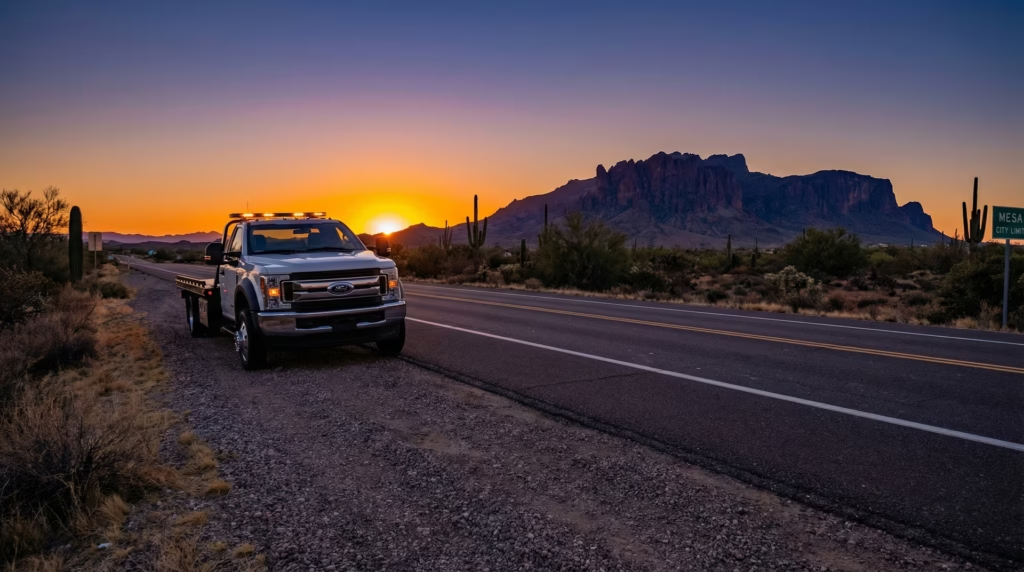
Let’s be real for a second. When people across the country think of “winter driving,” they picture white-knuckle commutes through blizzards and salting their driveways. Here in Mesa? We’re usually worrying about whether we need a light jacket for our morning coffee run or if it’s already warm enough for shorts.
But just because we don’t have snowplows scraping down Dobson Road doesn’t mean winter is a free pass for your vehicle.
Winter in the East Valley brings its own weird set of challenges. We’ve got the influx of winter visitors (hello, traffic), shifting tire pressures from those chilly 40-degree mornings, and the silent killer of car batteries: that sudden drop in temperature after a brutal summer.
If you want to avoid calling for flatbed towing on the side of the Loop 202, you need to know what actually goes wrong here in the desert during the “cold” months.
Table of Contents
1. The Battery “Double Whammy” Effect
You might think batteries die in the winter because of the cold. That’s only half the story. In Arizona, the summer heat is what actually damages the internal structure of your battery. It cooks the chemicals inside, causing corrosion and fluid evaporation.
Then winter shows up.
When the temperature drops, your engine oil thickens, requiring more power to crank over. Simultaneously, the chemical reaction inside your already-heat-damaged battery slows down. It’s the perfect storm. You go to start your car in Superstition Springs on a crisp Tuesday morning, and… click, click, click.
Signs Your Battery is on Its Way Out
Slow Cranking: The engine sounds like it’s groaning before it starts.
Dim Lights: Your headlights look yellow or dim when idling but brighten when you rev the engine.
Electrical Gremlins: Power windows move slower than usual.
Pro Tip: Most batteries in Arizona only last about 2 to 3 years. If yours is older than that, don’t wait for it to fail. Get it tested now.
If you do get stuck with a dead battery, we handle gas delivery and jump starts, but prevention is always cheaper than a rescue.
2. Navigating the “Snowbird Season” Traffic Surge
The population of Mesa swells significantly between November and March. We love our winter visitors, but let’s be honest—the traffic dynamic changes instantly. You have drivers from all over North America, all with different driving styles, trying to navigate US-60 and the surface streets around Mesa Riverview.
This congestion leads to more fender benders than you might expect.
Data suggests that vehicle breakdowns are the most common reason for requiring a tow, accounting for over 50% of all towing requests. However, during peak tourist season, collision rates often tick upward.
Defensive Driving on the 60
The Superstition Freeway (US-60) can turn into a parking lot quickly. Increase your following distance. A lot of visitors aren’t familiar with our exit layouts or the sudden stops that happen near the interchange with the 101.
If you are unfortunate enough to get bumped, safety is your first priority. Move the vehicle out of the flow of traffic if possible. Our collision recovery team sees too many close calls where people try to inspect damage in the middle of a live lane.
3. Tire Pressure and the “Cold” Snap
You learned this in high school physics, even if you forgot it: Boyle’s Law. For every 10-degree drop in ambient temperature, your tires lose about 1 PSI (pound per square inch) of pressure.
In Mesa, we can have a 30-degree swing between the afternoon high and the overnight low. That’s enough to trigger your TPMS (Tire Pressure Monitoring System) light on a chilly morning.
Driving on under-inflated tires isn’t just bad for gas mileage; it’s a blowout risk. An under-inflated tire flexes more, building up heat (yes, even in winter), which can cause the sidewall to fail.
| Tire Issue | Why It Happens in AZ Winter | The Fix |
|---|---|---|
| Low Pressure Warning | Air contracts in cooler temps (overnight lows). | Check pressure in the morning before driving. Fill to door-jamb specs. |
| Dry Rot / Cracking | Summer sun dried out the rubber; cold makes it brittle. | Inspect sidewalls for tiny cracks. Replace tires over 6 years old. |
| Vibration | Flat spots from parking too long (common with RVs). | Move the vehicle periodically or use tire cradles. |
4. Heading North? Prepare for Real Winter
This is where things get tricky. While we are enjoying 65-degree weather in Dobson Ranch, a two-hour drive north on SR-87 to Payson or I-17 to Flagstaff puts you in serious winter conditions.
Many Mesa drivers get into trouble because they take their “valley setup” into the mountains. Summer tires turn into hockey pucks on frozen asphalt.
If you are planning a weekend trip to play in the snow:
- Check Your Fluids: Ensure your windshield washer fluid is rated for freezing temps (the blue stuff we use here might freeze at 32°F).
- Bring Chains: You might not need them, but if ADOT puts up the restrictions, you’ll be turning around without them.
- Pack an Emergency Kit: Blankets, water, and snacks. If you slide off the road, it might take time for a tow truck to reach you in rural areas.
5. Avoid Predatory Towing Scams
This applies year-round, but it’s worth mentioning because desperation often leads to bad decisions during a breakdown. Not every tow truck you see is operated by the good guys.
The industry has a dark side known as “predatory towing.” This involves unauthorized trucks showing up at accident scenes or aggressively towing vehicles from parking lots for minor infractions. You don’t want to end up in a situation like the residents of Chicago who dealt with the infamous Lincoln Towing Service, a company so aggressive they inspired songs about their tactics.
While that’s an extreme example, local scams do happen.
How to Vet a Towing Company
We’ve been serving East Mesa and beyond for years, and we believe in transparency. Here is what you should look for:
Get Multiple Quotes: Prices for towing services can vary significantly. We always recommend getting at least 3 quotes if you aren’t in an immediate emergency. A standard local tow might range from $75-$125 plus mileage, but scammers might quote you “low” and hit you with $500 in fees later. Check Reviews: Any reputable towing company in Mesa should be happy to provide references or point you to their online reputation. Ask About Warranties: Quality work should come with a guarantee. If we fix a flat or jump a battery, we stand by that service.
Expert Insight: “Never let a tow truck hook up to your vehicle unless you called them or police dispatched them. ‘Chasers’ who listen to scanners and show up uninvited are often looking to price gouge.”
Special Considerations for EV Owners
Electric vehicles are popping up all over Gilbert and Chandler. If you drive a Tesla, Rivian, or Ford Lightning, winter affects you differently.
Cold temps reduce battery range. Even 45 degrees can sap efficiency. But more importantly, towing an EV requires specific knowledge. You can’t just drag these cars with two wheels on the ground because the motors can generate electricity and fry the onboard inverters.
We specialize in electric vehicle towing. We know the weight ratings and the proper tie-down points. Speaking of weight, EVs are heavy. For instance, the Grokipedia entry on towing notes that the 2025 Ford F-150 Lightning EV is rated for a maximum of 10,000 pounds, but the truck itself is significantly heavier than its gas counterpart due to the battery pack. This requires heavy-duty towing equipment to move safely.
A Note for Fleet Managers
If you run a business with delivery vans or work trucks in the Valley, winter is a great time to review your roadside assistance plan. The Department of Transportation (DOT) regulates interstate commercial towing operations involving vehicles over 10,001 pounds. They apply strict hours-of-service (HOS) rules to prevent driver fatigue.
According to Grokipedia, these rules include a maximum of 11 hours of driving after 10 consecutive hours off-duty. We adhere strictly to these safety standards for our fleet services because the last thing you need is a liability issue during a recovery operation.
Stay Safe Out There
Winter in Mesa is beautiful—it’s the reason half the country wishes they lived here. But between the battery-killing temperature swings, the snowbird traffic on the 202, and the glare of the low winter sun, you have to stay alert.
The average tow truck driver covers over 25,000 miles per year, so we’ve seen pretty much everything the road can throw at you.
If you find yourself stuck in a driveway in Apache Junction or on the shoulder of US-60, keep our number handy. We’ll get you and your vehicle home safely.
Ready to Get Started? Contact Tow Mesa Today
When you need professional towing services in Mesa and surrounding communities, Tow Mesa is here to help. Our experienced team provides quality workmanship with transparent pricing and a commitment to your complete satisfaction.
Call now for immediate help Call us at 480-725-5862.
Frequently Asked Questions
Why do car batteries often fail during Mesa’s winter months?
Arizona’s summer heat damages the battery’s internal structure, and when temperatures drop, engine oil thickens, requiring more power to start. This combination of heat damage and cold-start strain often leads to battery failure on chilly mornings.
Why does my tire pressure light turn on during cold Mesa mornings?
Tire pressure drops by approximately 1 PSI for every 10-degree decrease in temperature. Significant temperature swings between Mesa’s warm afternoons and chilly nights can trigger your Tire Pressure Monitoring System (TPMS) light as the air inside the tires contracts.
What should I prepare before driving from Mesa to northern Arizona in the winter?
Ensure your windshield washer fluid is rated for freezing temperatures, carry tire chains, and pack an emergency kit with blankets and water. Your vehicle’s standard ‘valley setup’ is often unprepared for the snow and ice found in higher elevations like Flagstaff or Payson.
How can I avoid predatory towing scams after an accident?
Only work with reputable, vetted towing companies and be wary of unauthorized tow trucks that show up unprompted at accident scenes. Always confirm the towing service’s credentials and pricing before allowing them to hook up your vehicle to avoid aggressive or illegal tactics.
What are the signs that my car battery is about to die?
Common warning signs include the engine groaning or cranking slowly, dim headlights when idling, and electrical components like power windows moving slower than usual. Because of the extreme Arizona heat, most local batteries only last between 2 and 3 years.