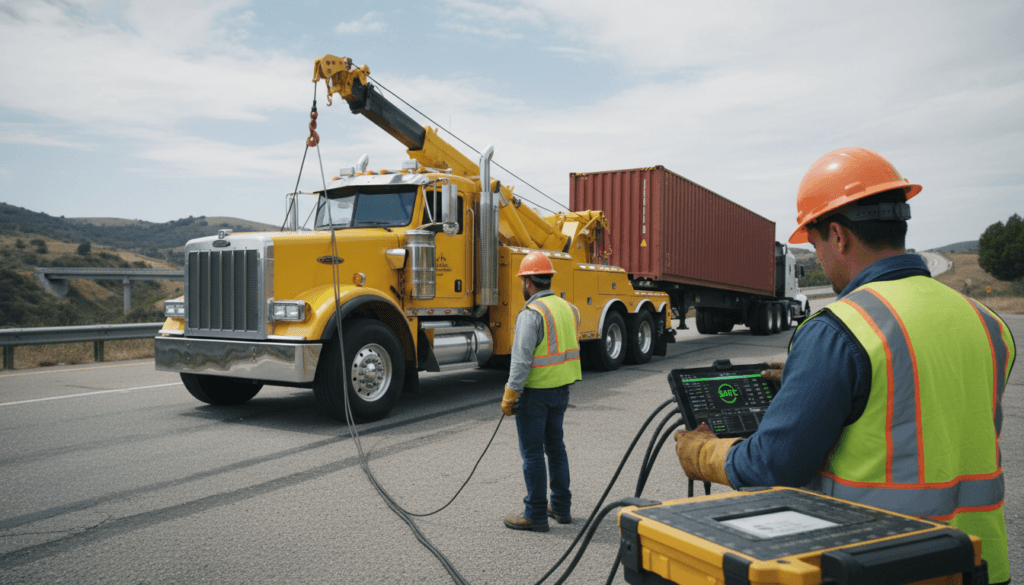
Navigating the complexities of large-scale logistics requires a precise understanding of equipment capacities to ensure every journey remains safe and efficient for all road users. When dealing with massive machinery or commercial vehicles, mastering the math behind heavy duty towing is the only way to prevent catastrophic mechanical failure or dangerous jackknife accidents on the road.
Table of Contents
The Critical Importance of Weight Limits in 2026
As we move into January 2026, the demands on the transportation and construction industries in Mesa, Arizona, continue to grow. With new infrastructure projects launching this quarter, the frequency of hauling oversized equipment has reached an all-time high. However, increased demand should never lead to compromised safety. Understanding weight limits isn’t just about following the law; it is about protecting your investment and ensuring the longevity of your fleet.
When a vehicle is pushed beyond its engineered capacity, the consequences are immediate and often “disastrous.” Overloaded trailers can lead to tire blowouts, brake fading (where brakes lose their effectiveness due to heat), and structural failure of the hitch or frame. By taking a proactive approach to heavy duty towing, operators can mitigate these risks before the wheels ever touch the pavement.
Essential Terminology for Calculating Tow Capacity
Before you can run the numbers, you must understand the acronyms found on your vehicle’s door jamb or in the manufacturer’s manual. These ratings are the “north star” for safe operations.
- GVWR (Gross Vehicle Weight Rating): The maximum weight the towing vehicle can safely weigh, including fuel, passengers, and the tongue weight of the trailer.
- GCWR (Gross Combined Weight Rating): The maximum allowable weight of the entire “rig”—the towing vehicle plus the trailer and all cargo.
- GAWR (Gross Axle Weight Rating): The maximum weight a single axle (front or rear) can support.
- GTW (Gross Trailer Weight): The total weight of the trailer plus the cargo loaded onto it.
| Weight Metric | What It Measures | Why It Matters |
|---|---|---|
| GVWR | Vehicle + Fluids + Cargo | Prevents frame and suspension damage. |
| GCWR | Truck + Trailer + Load | Ensures engine and transmission don’t overheat. |
| Tongue Weight | Downward force on the hitch | Crucial for steering and braking control. |
Step-by-Step: How to Calculate Your Safe Towing Capacity
Calculating your limits is a multi-step process that requires more than just a quick glance at a brochure. To avoid a disaster, follow these steps meticulously. If you find your equipment is nearing its limit, it may be time to consult our full range of services to see if a professional recovery vehicle is better suited for the job.
1. Identify Your Curb Weight
The curb weight is how much your truck weighs with a full tank of gas and all fluids, but without any passengers or cargo. You can find this in your owner’s manual. Subtracting the curb weight from the GVWR tells you how much “payload” capacity you have left for people and the trailer’s tongue weight.
2. Calculate the Actual Trailer Weight
Don’t guess the weight of your cargo. Whether you are hauling a bulldozer or a disabled semi-truck, use a local scale to get an accurate GTW. In the world of heavy duty towing, being off by even 500 pounds can change the handling characteristics of the vehicle significantly, especially on the steep grades found on the outskirts of Mesa.
3. Factor in the Tongue Weight
Tongue weight should typically be 10% to 15% of the total Gross Trailer Weight. If the tongue weight is too low, the trailer may sway dangerously. If it is too high, it will lift the front wheels of the towing vehicle, making steering nearly impossible. This balance is critical when performing specialized vehicle towing for heavy-duty assets.
Seasonal Considerations for January 2026
As we navigate the mid-winter season, road conditions in the Southwest can be deceptive. While Mesa remains relatively dry, the “Beeline Highway” (SR 87) and I-10 can experience sudden temperature drops and high winds. Wind resistance plays a massive role in heavy duty towing calculations. A trailer that is within weight limits on a calm day can become a liability in 40 mph gusts.
Furthermore, January often sees increased fleet inspections. Ensuring your weight limits are clearly marked and strictly adhered to can prevent costly fines and “out-of-service” orders from the Department of Transportation (DOT). At Tow Mesa, we prioritize safety and compliance in every job we take on; you can learn more about us and our commitment to industry-leading safety standards on our dedicated profile page.
When the Math Doesn’t Add Up: Calling the Professionals
Sometimes, the load is simply too large for a standard fleet vehicle. Attempting to “make it work” with an undersized truck is the most common cause of roadside disasters. Professional heavy-duty recovery teams use integrated tow trucks with high-torque engines, multi-axle configurations, and heavy-duty braking systems designed specifically for loads exceeding 26,000 pounds.
Professional operators also account for “dynamic loading”—the way weight shifts during braking or turning. This is something a simple static calculation cannot fully predict. If your math suggests you are within 10% of your maximum GCWR, it is often safer to opt for a professional heavy duty towing solution rather than risking a mechanical failure that could sideline your business for weeks.
If you are unsure about your load calculations or find yourself facing a recovery situation this winter, Tow Mesa is ready to assist with expert precision. Contact our team today at 480-725-5862 to speak with a specialist who understands the nuances of heavy-duty recovery. For a fast and accurate estimate on your next haul, please request a heavy duty towing quote through our secure online portal.