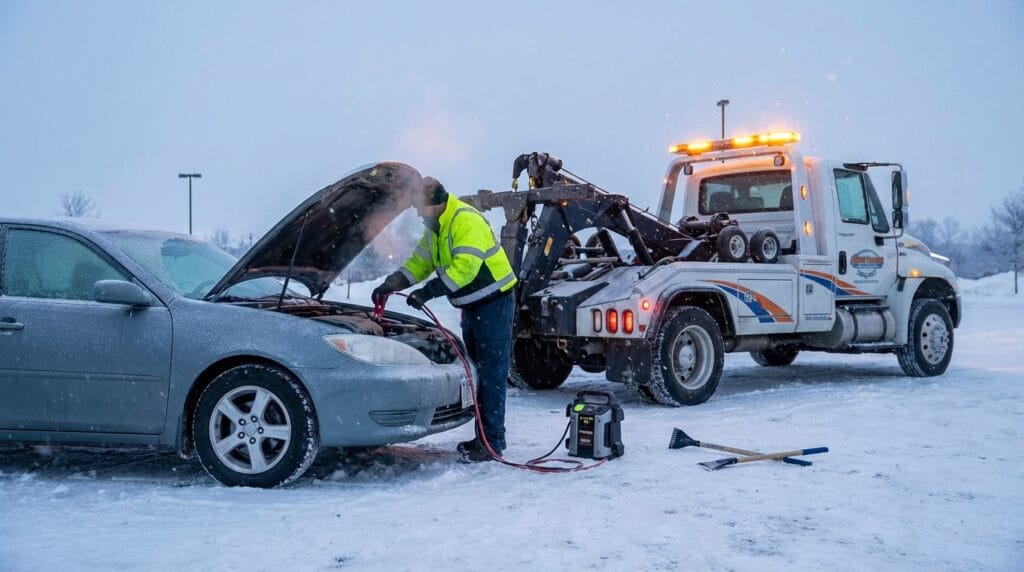
As the calendar turns to January 2026, drivers in Mesa and throughout the Valley are waking up to brisk mornings that can test the limits of their vehicle’s battery and engine. Whether you are heading up north to Flagstaff for snow sports or simply dealing with an unexpectedly frosty desert morning, knowing the proper technique for a cold starting car is essential to avoid engine damage and get on with your day.
Table of Contents
Why Cold Weather Strikes Your Engine Hard
Even in Arizona, temperatures can dip low enough to impact your vehicle’s performance. When a car sits overnight in dropping temperatures, two primary issues occur: fluids thicken, and battery output drops. Motor oil becomes more viscous, making it harder for the oil pump to circulate lubrication to critical engine components. Simultaneously, your battery’s chemical reaction slows down, reducing its ability to provide the strong electrical current needed to crank a stiff engine.
In 2026, modern vehicles are equipped with smarter sensors to handle these shifts, but the fundamental physics remain the same. A cold engine requires more energy to turn over, exactly when the battery has the least energy to give.
Step-by-Step: How to Cold Start Your Vehicle
The correct method for cold starting car engines depends heavily on what you drive. With the rise of EVs in the East Valley and the enduring popularity of classic cruisers, a one-size-fits-all approach doesn’t work.
Fuel-Injected Engines (Most Modern Gas Cars)
Most vehicles on Mesa roads today are fuel-injected. These systems are designed to manage cold starts automatically, but you can help them out:
- Turn off accessories: Before turning the key, switch off the heater, radio, and headlights to maximize battery power for the starter.
- Turn the key (or push the button): Crank the engine for no more than 10 seconds.
- Don’t pump the gas: Unlike older cars, pumping the pedal can confuse the computer and flood the engine.
- Wait if it fails: If it doesn’t start immediately, wait 30 seconds to let the battery recover and the starter motor cool down before trying again.
- Idle briefly: Once started, let the oil circulate for 30 to 60 seconds before driving gently.
Electric Vehicles (EVs) in 2026
With more EVs hitting the market this year, winter care has evolved. While EVs don’t have engine oil to thicken, their batteries are highly sensitive to cold.
- Precondition while plugged in: Use your vehicle’s app to warm up the battery and cabin while still connected to the charger. This preserves your range.
- Monitor range loss: Remember that 2026 data suggests EVs can lose up to 20-30% of their range in freezing temps due to battery chemistry and heating demands.
- Keep it plugged in: Many modern EVs have thermal management systems that run automatically to keep the battery in a safe temperature zone if the car is plugged in.
Carbureted Engines (Classic & Vintage Cars)
Mesa loves its classic cars. If you are driving a vintage beauty without fuel injection, the cold starting car process is an art form:
- Prime the engine: Press the gas pedal once or twice to squirt a small amount of fuel into the intake.
- Engage the choke: If manual, pull the choke knob out.
- Feather the gas: You may need to lightly tap the accelerator once the engine catches to keep it running until it warms up.
Troubleshooting Cold Start Noises
Sometimes your car tries to tell you exactly what is wrong through sound. Use this table to diagnose why you might be stuck in the driveway.
| Sound | Likely Culprit | Action Plan |
|---|---|---|
| Silence | Dead Battery or Bad Connection | Check battery terminals for corrosion; try a jump start. |
| Clicking (Rapid) | Weak Battery | The starter solenoid is engaging but lacks power. Needs a jump. |
| Grinding | Starter Motor Issue | Stop immediately to avoid flywheel damage. Call for a tow. |
| Whirring (Spinning) | Broken Starter Drive | The starter is spinning but not engaging the engine. Requires repair. |
2026 Winter Automotive Trends
This year, we are seeing a surge in “Winter-Ready” technology even in standard commuter vehicles. New adaptive remote start systems now measure ambient temperature to automatically determine how long the engine needs to idle before it’s safe to drive. Additionally, synthetic oils have become the standard for 2026 models, offering far superior flow at low temperatures compared to conventional oils of the past.
However, technology can’t fix a neglected battery. The average lifespan of a car battery in Arizona is shorter than in cooler climates due to our intense summer heat. A battery that survived the summer might finally fail during the first true cold starting car attempt of the winter. If your battery is over three years old, January is the prime month for it to give up the ghost.
When to Call the Pros
If you have tried the steps above and your vehicle still refuses to start, or if you hear metal-on-metal sounds, it is time to stop. forcing a frozen or cold engine to start can cause catastrophic damage to the starter motor, flywheel, or internal bearings. Whether you are stuck in your driveway in Mesa or stranded on the shoulder of the Loop 202, professional help ensures your vehicle is handled safely without causing further expensive damage.
Don’t let a dead battery or stubborn engine freeze your plans for the day. Call our friendly dispatch team immediately at 480-725-5862 for rapid response 24/7. You can also request a quick quote online to get back on the road safely and affordably.