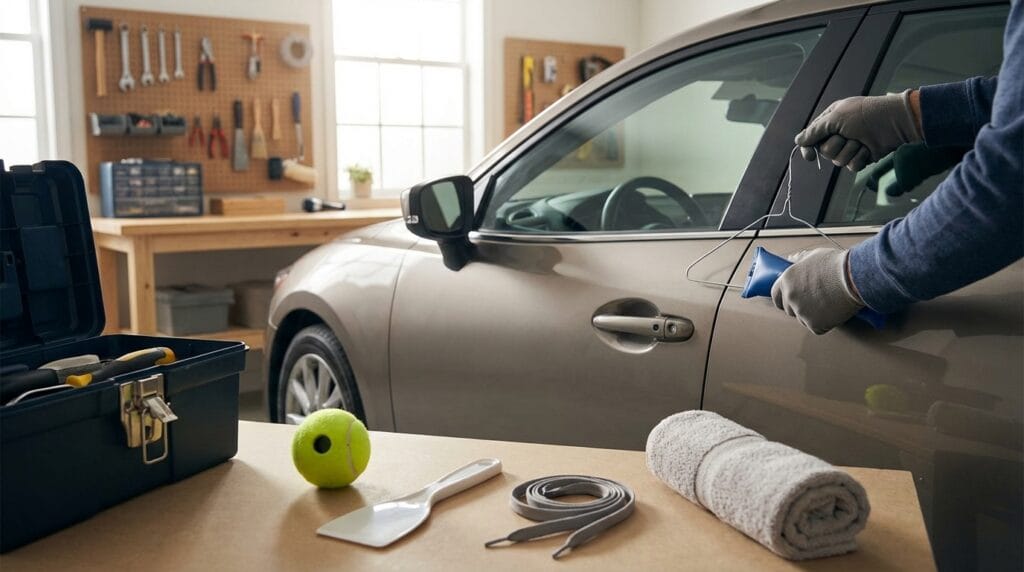
It is a freezing December evening in Mesa, and amidst the hustle of the 2025 holiday season, the realization hits that your keys are sitting on the driver’s seat while you stand shivering outside. Dealing with a car lockout is stressful, but before you panic, there are several DIY methods using common household items that can help you regain access without shattering a window.
Table of Contents
Assessing the Situation: Safety and Precautions
Before you start rummaging through your garage or kitchen for tools, take a moment to assess the vehicle. Modern vehicles manufactured in the last five to ten years often have sophisticated anti-theft systems, “deadlocking” features, and side airbags that can be triggered if you are too aggressive with door tools. Furthermore, given that it is December, cold temperatures can make rubber weather stripping brittle and glass more prone to shattering under pressure.
If a child or pet is locked inside the vehicle, do not attempt these DIY methods; call emergency services immediately. However, if you are simply stranded in your driveway, the following household hacks might save you a service call fee.
Method 1: The Shoelace Technique (Vertical Locks Only)
This is perhaps the most famous method, but it has a specific limitation: it only works on older vehicles that utilize vertical locking knobs (the ones that stick up near the window). It will not work on smooth recessed locks or side-switch locks found on most 2025 models.
What You Need:
- A long, sturdy shoelace (preferably from a boot).
The Steps:
- Tie a Slipknot: Create a small loop in the middle of the shoelace that can be tightened by pulling on the ends.
- Work into the Door Jamb: Start at the top corner of the driver’s side door. Gently wiggle the shoelace back and forth so it slips between the door frame and the vehicle body. You may need to use a plastic doorstop to create a tiny gap.
- Lower and Hook: Lower the loop until it is hovering over the lock mechanism.
- Tighten and Pull: Maneuver the loop around the lock knob, pull the strings tight to grip the knob, and pull upward.
Method 2: The Blood Pressure Cuff and Rod (The “Professional” DIY)
Professional locksmiths use an “air wedge” to create a gap in the door. If you have a home medical kit, a standard blood pressure cuff can function as a surprisingly effective substitute. This is often the safest way to handle a car lockout on your own because the soft cuff is less likely to scratch the paint than a screwdriver.
What You Need:
- A blood pressure cuff (manual pump style).
- A long, rigid rod (a straightened wire coat hanger or a removed windshield wiper blade).
The Steps:
- Insert the Cuff: Slide the deflated cuff into the top corner of the door frame. If it is too tight, use a plastic spatula to pry it open just enough to slide the fabric in.
- Inflate Gently: Squeeze the pump bulb to inflate the cuff. Watch the door frame carefully; you only need a gap of about half an inch. Warning: Over-inflating can permanently bend the door frame or shatter the window glass, especially in winter temperatures.
- Insert the Rod: Once the gap is created, slide your long rod into the vehicle.
- Hit the Button: Guide the rod to press the electric unlock button on the armrest or to hook the interior door handle.
Method 3: The Coat Hanger (Horizontal Locks)
If you do not have a blood pressure cuff, the classic wire coat hanger is the go-to tool. However, this requires extreme patience and a steady hand.
Take a wire hanger and untwist it, leaving the hook at the end intact (but tightened slightly). You will be sliding this between the rubber weather stripping and the window glass. The goal is to hook the control arm inside the door panel. Note: This is risky on modern cars as you can damage the wiring for electric windows, speakers, or side airbags.
Comparing DIY Methods vs. Professional Service
It is important to weigh the risks of trying to break into your own car against the cost of professional assistance. Below is a breakdown of how these methods compare to calling Tow Mesa.
| Method | Risk of Vehicle Damage | Success Rate (2020+ Models) | Required Time |
|---|---|---|---|
| Shoelace | Low | Very Low (locks are recessed) | 15-30 Minutes |
| Coat Hanger | High (Paint scratches, wiring damage) | Low to Medium | 30+ Minutes |
| BP Cuff / Air Wedge | Medium (Bent door frame) | Medium | 15-20 Minutes |
| Professional Locksmith | None (Insured & Trained) | 100% | Fast Arrival & Entry |
The Risks of Winter DIY Entries
Since we are currently navigating the colder months of late 2025, you must be extra cautious. Cold weather changes the physical properties of your car’s components. The rubber seals around your windows become harder and less flexible, making them easier to tear when forcing a tool through. More importantly, tempered auto glass becomes more brittle in freezing temperatures.
Applying pressure to the corner of a window with a makeshift wedge during a DIY car lockout attempt can cause the entire window to shatter unexpectedly. Replacing a side window is significantly more expensive than the cost of a tow truck or locksmith service call.
When to Stop and Call for Help
While the satisfaction of MacGyvering your way back into your vehicle is high, there comes a point where persistence causes damage. If you have been trying for more than 20 minutes, or if you hear cracking sounds from the door frame or glass, stop immediately. Scratching the tint on your window, tearing the weather stripping, or damaging the internal locking mechanism will turn a minor inconvenience into a costly repair bill.
Modern vehicles are designed to keep thieves out, which unfortunately means they are also very good at keeping owners out. If your vehicle has deadlocking features (where the internal handles are disabled when the car is locked from the outside), no amount of fishing with a coat hanger will open the door.
Conclusion
If these household tricks don’t work, or if you are worried about damaging your vehicle’s paint in the cold, don’t hesitate to reach out for professional help. You can call our dispatch team immediately at 480-725-5862 for rapid assistance anywhere in the Mesa area. Alternatively, request emergency lockout services online to get back on the road safely and quickly.